The Stories We Tell Ourselves
This week's Tuesday 2¢; a story about the importance of the stories we tell, and telling them well.
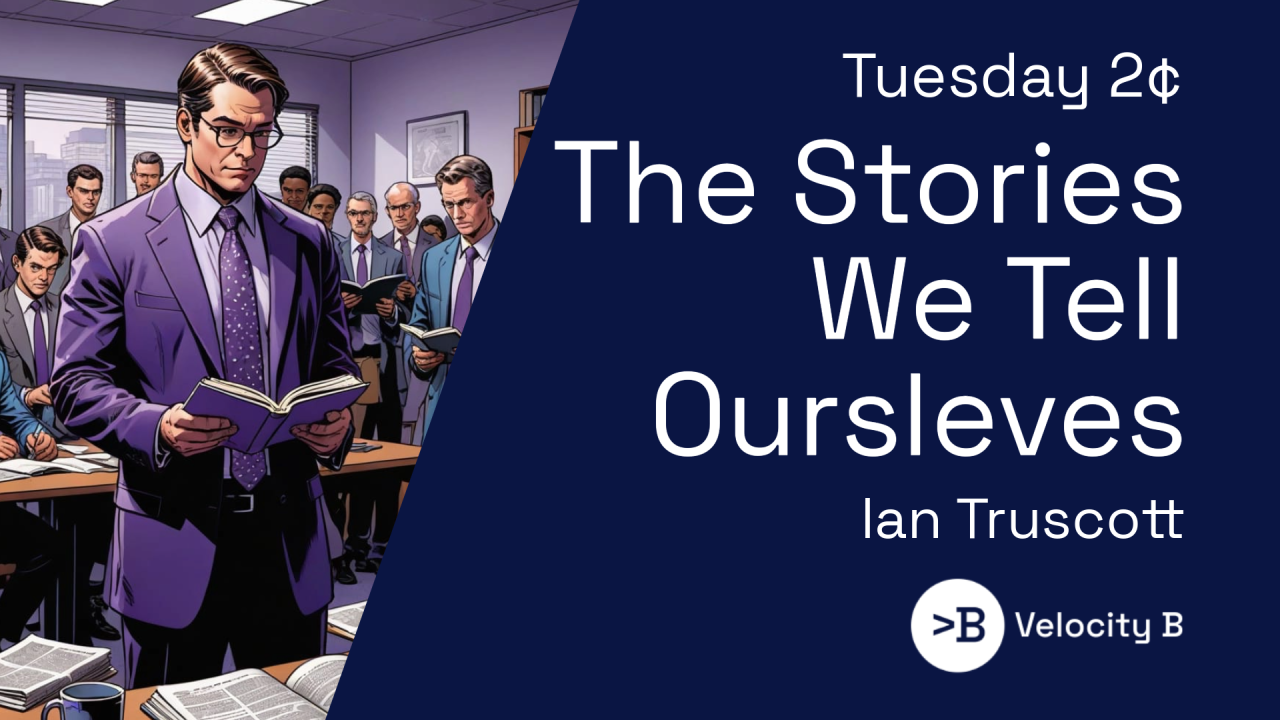
I’ve just finished recording a segment for the Rockstar CMO podcast with my chum Jeff Clark, in which we talk about Kerry Cunningham’s latest work at 6sense that discusses Folklore Debt - the stories that are told inside a business that shape the culture, guide how decisions are made, and can constrain growth and innovation.
No spoilers on what Jeff and I discuss (it’ll be live on Saturday), but preparing for the chat got me thinking about the stories we tell ourselves.
If you’ve ever been coached, tried to take up running or writing, you’d have had this advice. You need to think of yourself as a person who does the thing you’d like to become a habit.
You are a runner or a writer now; it has to become part of your identity, the story you tell yourself and probably random people on social media or at parties, as it’s also important to do this in public.
Similarly, with coaching and psychology techniques like self-affirmation, it’s the repeated story you tell yourself.
Apparently, Muhammad Ali believed he was the greatest before he was, and is quoted as saying,
“If my mind can conceive it, and my heart can believe it – then I can achieve it”.
Seth Godin talks about tribes and how “people like us, do things like this”, how the stories we tell ourselves shape our behavior, aspirations, and common values.
That’s why folklore matters; the stories we tell ourselves aren’t just explanations of how we got here; they guide the future.
Whether it’s a company convinced it wins through product innovation from when it was the cool kid in the category, a salesperson who believes they’re a natural closer having once struck a hot market, or someone trying to become a runner, the story guides the choices that follow.
The danger comes when the story outlives the circumstances that created it.
We all need a story to guide us, but it’s important to remember that we’re still writing it, and that the story needs to serve who we are now, not who we used to be.
Whether it’s a business that needs to recognize it’s no longer the cool kid, and the market has changed, or it’s us understanding where we, as marketers, fit in the world with AI (damn it, I was determined not to mention AI this week!).
My chum Robert Rose has a wonderful catchphrase he uses at the end of his podcast: “It’s your story to tell, tell it well,” and I think this is not just true for the stories we tell others but for those we tell ourselves, as a business and as people.
I’ve summarised Kerry’s work wildly, so I encourage you to take a look at it. One of the joys of having a podcast is riding around on someone else’s hobby horse for 30 minutes with a chum. If you’d like to join us, drop by Rockstar CMO.