Robot perfect is the enemy of good
This week, AI can lead us down the rabbit hole of perfection, but if we want to get shit done - should we follow?
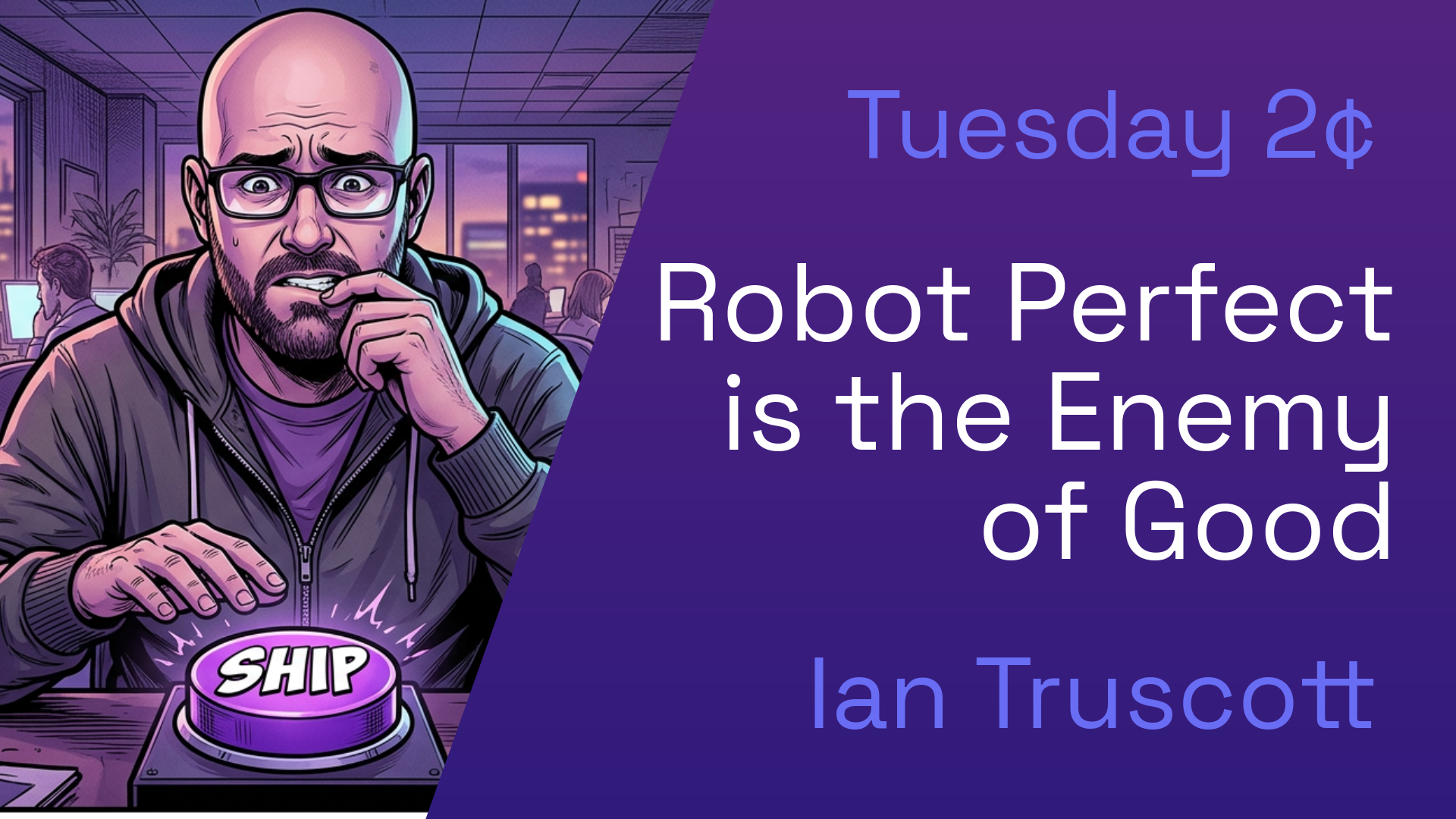
This week, AI can lead us down the rabbit hole of perfection, but if we want to get shit done - should we follow?
There seem to be some common experiences when it comes to productivity and AI.
We are able to do things we couldn’t do before. Although some of those are pointless, like vibe coding a personal task management app, complete with a Kanban board, which is fun but ultimately not efficient when there are many solutions available for a few bucks a month (unless you convince yourself you are doing this as a learning experiment to see if SaaS really is dead - it isn’t - and, yep, guilty).
Of course, some of these new things make us more productive; for example, I just had Claude mass-update HubSpot contacts based on tasks, which is intuitive in an intelligent chat interface but would have tied the shiny new HubSpot UI in knots.
Some things are faster but a little bit shitter (normally the price you pay for scale), like having AI draft outbound sales emails for you, or any kind of content production if you trust its expertise rather than your own or the dreaded email you get that says “with the help of ChatGPT, I did…” that precedes a document they’ve not read.
And some things are slower, but arguably better - this argument is the topic for this week.
I’ve had a number of conversations with creative content folks, where this has been the experience of working with generative AI, as it offers a world of research and rabbit holes to explore as you develop an idea, gently nudging you toward a path to perfection.
Shipping that idea, sending it to the boss, pressing publish on a blog post, or however we present it to the world takes longer as we sniff out every rabbit hole it presents.
And, when we are done, we ask our favorite AI for its opinion, and it suggests one more thing you might not have considered, and the cycle continues.
This striving for perfection is understandable. I call this FOFU (Feat of F**king Up) or the fear of looking like a c*ck, but behavioral psychologists call this “loss aversion”.
Publishing something risks a real, nameable loss; someone spots the flaw, so one more edit always feels free by comparison. Add the nagging feeling of self-doubt and imposter syndrome, and you've got a pretty compelling case for never pressing publish.
And, we all know the expression “perfect is the enemy of good” or as Seth Godin says, “done is better than perfect” and from his book Linchpin:
“The only purpose of starting is to finish, and while the projects we do are never really finished, they must ship.”
Aside from slowing us down, who’s really interested in reading anything that has had all of its “pointy bits” polished away through all these AI reviews?
A pointy bit that might be an opinion that the reader can really engage with.
I said “some things are slower, but arguably better” and resolving that is where we apply our human taste and discernment to decide whether this is done.
As robot perfect is the enemy of good.
Credit Mr Robert Rose for the phrase "pointy bits" :-)