Do B2B Buyers Really Want to Be Surprised?
We don't want to be B2Boring or B2Biege, but do buyers really want to be surprised?
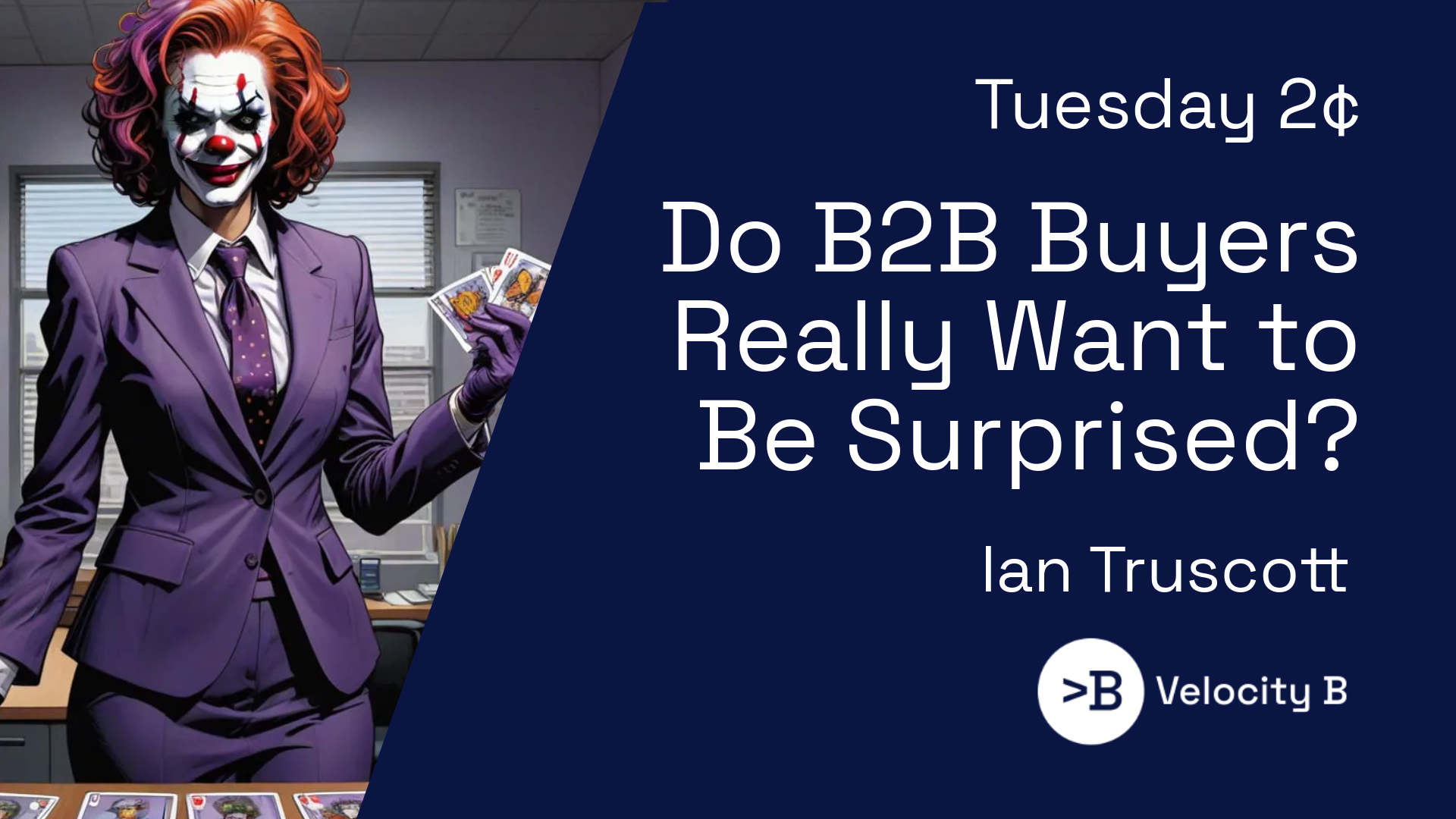
We don't want to be B2Boring or B2Biege, but when it's time to sign the contract, do buyers really want to be surprised?
In B2B marketing, we are encouraged to adopt the tactics and techniques of B2C marketing. The premise here is that we are selling to humans, not companies, and the difference lies in the level of consideration in the purchase.
I was listening to a podcast today about the power of surprise in B2C marketing, and it made me wonder whether this is an idea we should be encouraged to adopt in B2B?
There is a ton of research and data that support this: a surprise makes your brand more memorable; it basically wakes up the lazy pattern-matching prediction engine we call a brain and says to it, “HELLO - this needs attention.”
And of course, in B2B, we are fighting the belief that B2B means B2Boring or B2Beige; we really want to be the fun guy at the party, and this is supported by a lot of research that tells us that being dull is not the safe option; we have to spend more to promote a dull campaign than a memorable one.
Which is probably why Accenture (or maybe PwC... honestly I can’t recall) seems to own every billboard at Heathrow Terminal 5.
Essentially, most of us don’t have the luxury of the budget that allows us to be boring.
So it's easy to conclude that more surprise is always better.
But…
Do B2B buyers want surprises?
Yes, marketers want to be remembered, but buyers want to avoid regret.
It might be a bit dull, and I was discussing this with a senior sales leader today, but a considerable amount of an enterprise B2B deal is risk management.
As I’ve banged on about here before - for the sponsor, it’s about FOFU (Feat of fucking up), and for other members of the buying group, it’s about managing cost, compliance, and change.
And let's give this old chestnut a little ride out - nobody gets fired for buying IBM, or whoever is the category leader that the CEO has heard of.
And sometimes reassurance is what your brand needs to convey. If those Accenture chaps show up in full clown face makeup, that would be memorable, but maybe the CFO wouldn’t trust them to count their beans.
Yes, surprise still matters.
Just not at the moment someone is trying to justify a seven-figure purchase to the board.
That's what the awareness phase is for. Surprise creates memories before buyers are buying. Later, those memories become familiarity. And familiarity reduces perceived risk.
Then, when the buying process begins, what they're looking for isn't surprise.
It's reassurance.